Why Versioning Matters
Versioning provides the control and safety you need to manage AI deployments:- Safe updates - Test changes before going live
- Version control - Track what changed and when
- Easy rollback - Revert to previous versions if needed
- Consistency - All channels use the same version simultaneously
- Audit trail - See complete history of your AI’s evolution
How Versioning Works
The deployment system has three key concepts:1. Profiles (Your Work in Progress)
A profile represents your AI’s current configuration:- Guidance instructions and rules
- Tool and integration settings
- LLM model selection and parameters
- Audience targeting rules
- General settings and preferences
2. Versions (Immutable Snapshots)
Versions are numbered snapshots (#1, #2, #3…) containing:- Profile configuration (guidance, tools, LLM settings)
- Knowledge snapshots (all sources at build time)
- Creation timestamp
- Immutable - never changes after creation
Versions are immutable by design. Once built, they never change. This ensures consistency - version #12 behaves identically every time, whether you deploy it today or next month.
3. Aliases (Production Pointers)
An alias is a named pointer to a specific version:- “Production” alias represents the currently active configuration
- Can be updated to point to different versions
- All channels connect to aliases, not directly to versions
- Allows switching versions without reconfiguring channels
Deployment Architecture
Building and Deploying
The typical workflow for deploying AI changes:Step 1: Make Changes
Edit your AI configuration:- Update guidance instructions
- Add knowledge sources
- Enable/disable tools
- Adjust audiences
Step 2: Test in Preview
Before building a version, test your changes: Use Preview Mode- Navigate to Behavior → Guidance
- Click the preview/test interface
- Ask sample questions
- Verify responses match expectations
- Check that tools work correctly
- Current profile configuration (not deployed version)
- Latest knowledge from data providers
- All active guidance rules
- Enabled tools and integrations
Step 3: Build Version
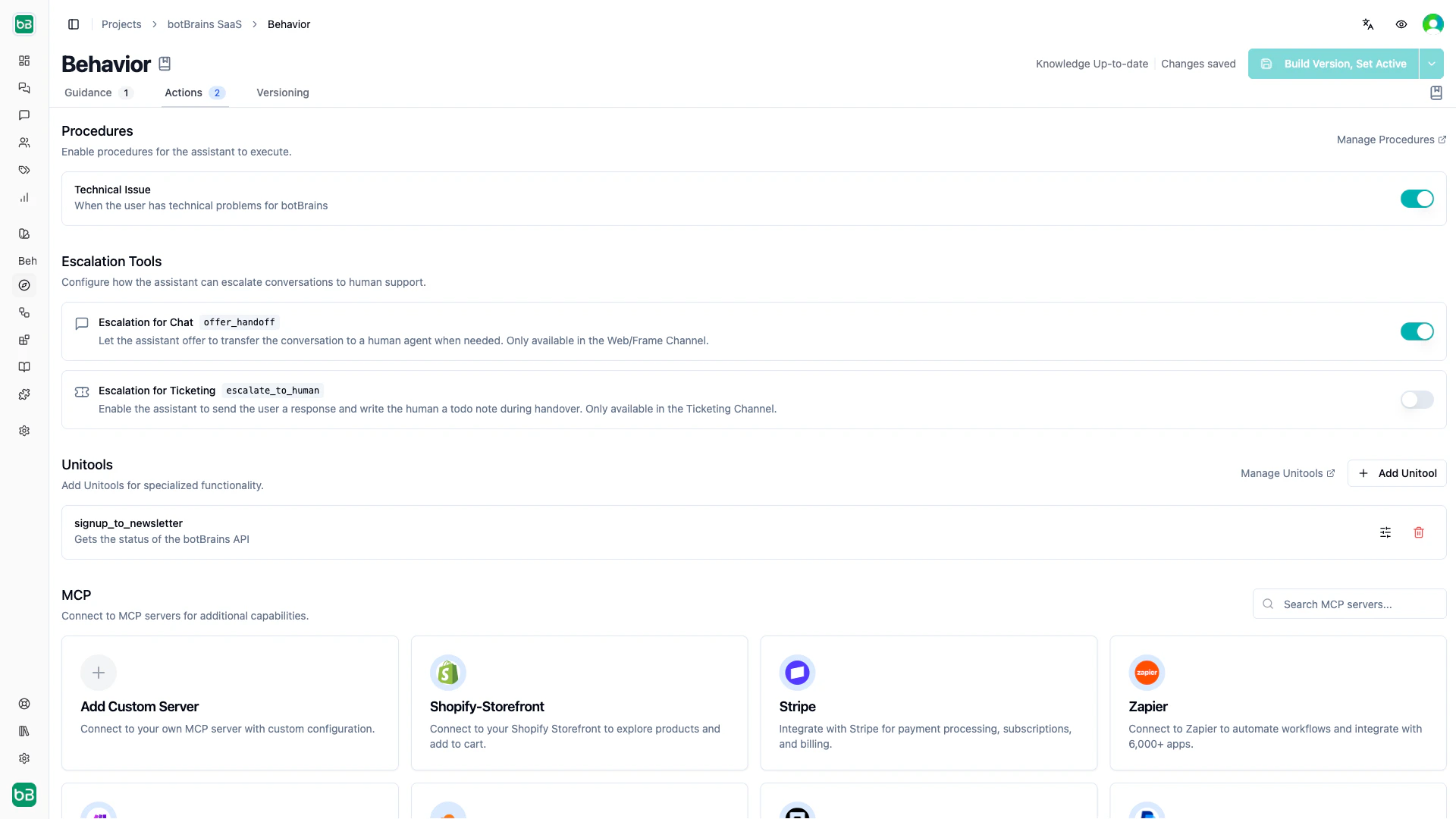
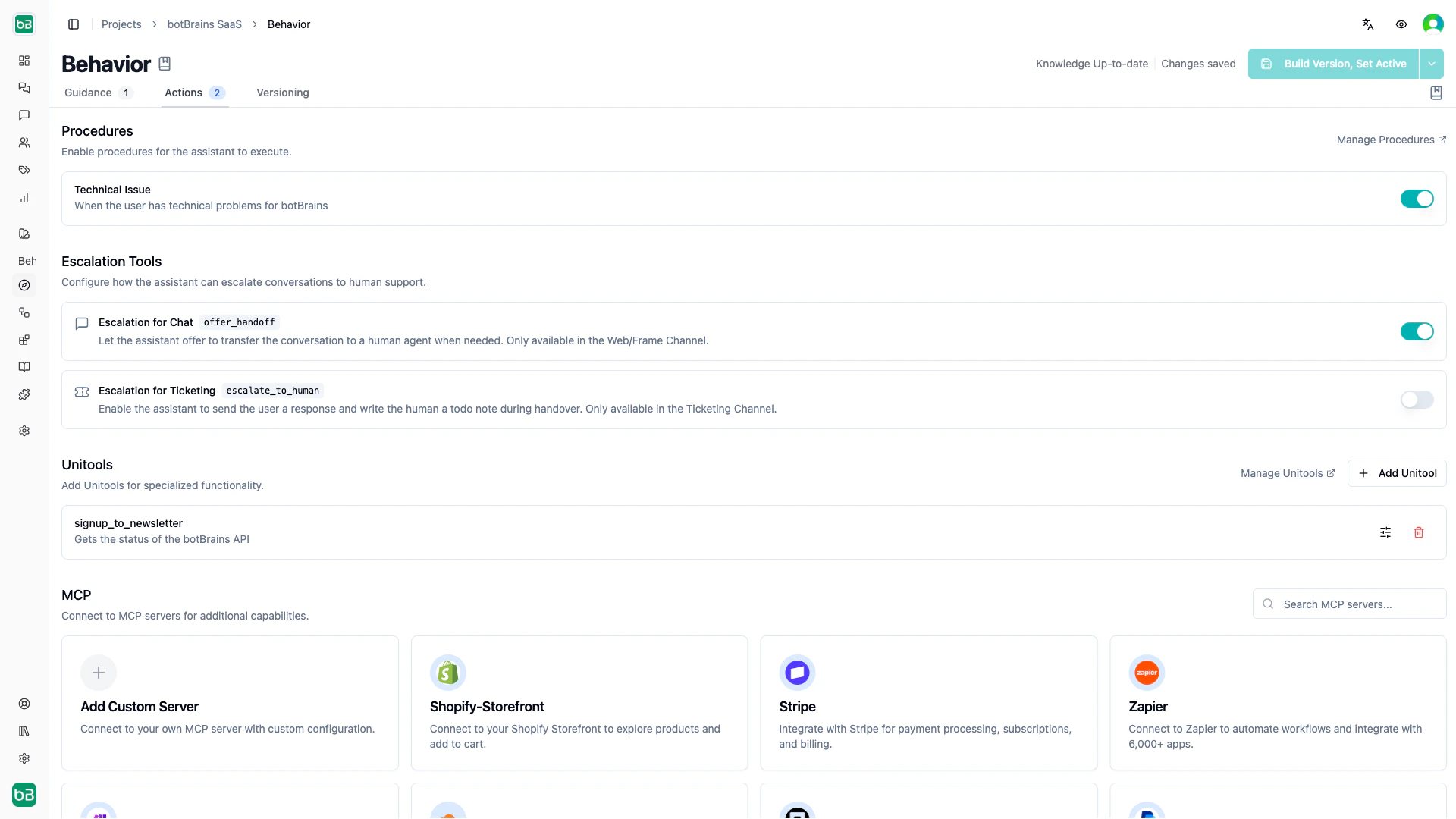
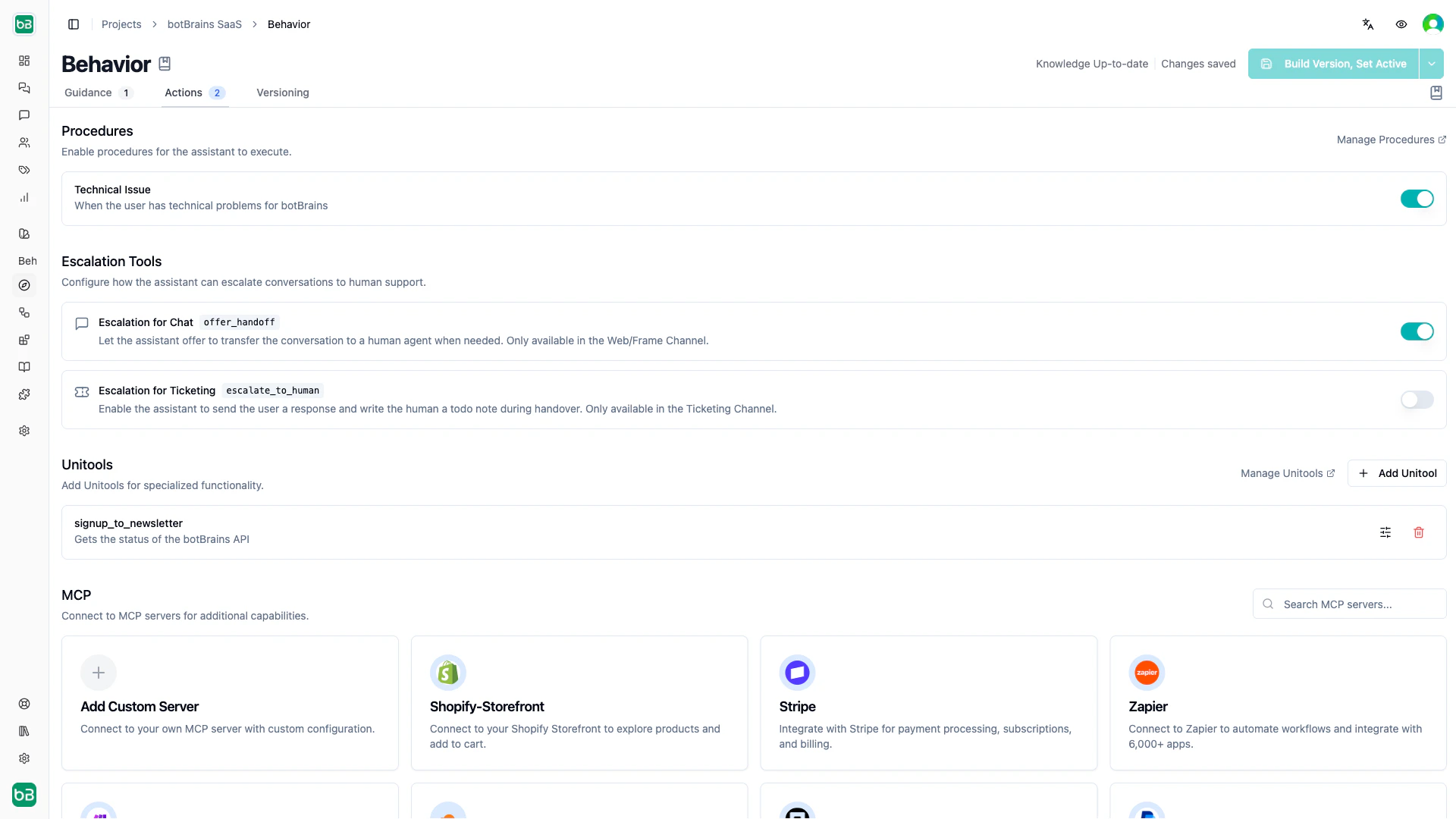
Navigate to Behavior → [Review your changes] and click Build Version, Set Active This process:- Creates new profile (e.g., v0.5 → v0.6)
- Captures knowledge snapshot - Indexes current state of all data providers
- Builds deployment - Compiles everything into deployable package
- Updates Production Alias - Points to new version
- Deploys to all channels - All connected integrations use new version
Building creates an immutable deployment. Once built, versions cannot be modified - you must build a new version for any changes.
Build Options Explained
Build Version, Set Active (Recommended)- Creates deployment AND sets as production
- All channels immediately use new version
- Takes 30-60 seconds
- Use for: Normal updates
- Creates deployment without setting as production
- Test version before going live
- Manually set as active later
- Use for: Major changes you want to review first
- For deployments affecting many channels
- Runs asynchronously in background
- Email notification when complete
- Use for: Large-scale deployments with 10+ channels
Step 4: Monitor Impact
After deployment:- Check conversations for new version
- Monitor metrics (CSAT, resolution rate)
- Review for any issues
- Rollback if needed (see below)
- Test sample questions in each channel
- Verify responses match expectations
- Check that new knowledge is accessible
- Confirm tools work correctly
- Review incoming conversations
- Watch for error rates or unusual patterns
- Check customer satisfaction scores
- Monitor escalation rates
- Compare metrics to previous version
- Review conversation topics and outcomes
- Gather team feedback
- Identify any issues requiring rollback or fixes
Managing Versions
View and manage all versions in Behavior → General → VersionsVersion List
Each version shows:- Version number (#1, #2, #3…)
- Profile name (v0.0, v0.1, v0.2…)
- Status - “Production” badge if active
- Creation date - When version was built
- Description - Build notes (e.g., “Build for profile v0.5”)
Setting a Version as Active
To switch production to a different version:- Navigate to Behavior → General → Versions
- Find the version you want to activate
- Click the ⋮ menu next to the version
- Select Set as Active
- Confirm the change
- Production Alias updates to new version
- All channels switch immediately
- Previous version remains available for rollback
Rolling Back
If a deployment causes issues, roll back quickly:Quick Rollback Process
- Identify the problem - Check conversations, metrics, errors
- Navigate to Versions - Behavior → General → Versions
- Find previous good version - Usually the version before current
- Set as Active - Click ⋮ → Set as Active
- Verify - Test with sample questions
When to Roll Back
Immediate rollback if:- CSAT drops significantly (> 0.5 points)
- High error rates in conversations
- Knowledge sources missing or incorrect
- Tools not working as expected
- User complaints spike
- Minor changes in metrics
- Isolated issues affecting few users
- Issues can be fixed quickly with knowledge updates
Post-Rollback
After rolling back:- Review what changed between versions
- Identify root cause
- Fix in development
- Test thoroughly
- Build and deploy again when ready
Channels and Production Alias
Understanding how channels connect to deployments helps manage updates effectively.Viewing Connected Channels
Navigate to Behavior → General → Channels to see:- All active channels
- Which alias they’re connected to
- Current version each is using
- Links to configure each channel
Channel Display
For each channel, you’ll see:Channel-Specific Behavior
Website Widget- Updates apply to new chat sessions immediately
- Existing open chat windows may use previous version until refresh
- Users who reload page get new version
- Consider deployment timing around peak traffic
- Agent assist suggestions use new version immediately
- Automated responses switch instantly
- No impact on ticket workflow or history
- Case deflection uses new version for new cases
- Agent assist updates immediately
- Historical case data unaffected
- Bot responses use new version immediately
- Direct messages and channel mentions update instantly
- Message history shows previous version’s responses
- New messages use new version immediately
- Conversation history preserved
- No impact on message delivery
While version switches are instant at the platform level, browser caching may cause brief delays (1-2 minutes) for website widgets. Users who refresh get the new version immediately.
Adding Channels
Channels are configured outside the Behavior section:- Website Widgets: Navigate to Frames
- Zendesk: Navigate to Integrations → Zendesk
- Salesforce: Navigate to Integrations → Salesforce
- Slack: Navigate to Integrations → Slack
- WhatsApp: Navigate to Integrations → WhatsApp
Knowledge Snapshots
Each deployment includes a knowledge snapshot capturing all sources at build time.What’s Included
When you build a version, the knowledge snapshot includes:- All synced data provider sources
- All snippets from collections
- Search table data (references, not copies)
- Current state of all embeddings
Why Knowledge is Versioned
Your knowledge sources are constantly evolving. Without versioning, your AI’s behavior would change unpredictably as knowledge updates. This creates problems: Inconsistent Responses - The same question might get different answers depending on when it’s asked. Untested Changes - New knowledge affects responses without validation or review. No Rollback Path - If updated knowledge causes issues, you can’t revert to previous working state. Debugging Nightmares - Impossible to know which knowledge version caused a specific response.Knowledge Staleness Indicator
After data providers sync new content, you’ll see:- Orange indicator: “Knowledge sources updated, rebuild needed”
- Rebuild to update: Build new version to incorporate latest knowledge
- Automatic syncs: If you have scheduled syncs, periodic rebuilds keep knowledge current
Keeping Knowledge Current
Establish a rebuild schedule based on update frequency: Daily Updates (e.g., support documentation changes daily)- Build new versions daily or multiple times per day
- Automate builds using API if needed
- Monitor staleness indicators
- Build new versions weekly
- Batch multiple knowledge updates into one version
- Schedule builds during low-traffic periods
- Build monthly or as needed
- Focus builds on significant knowledge additions
- Combine with guidance improvements
Best Practices
Version Management
Build frequently for active development- During initial setup: Build after each significant change
- Test each version before setting as production
- Keep version history clean
- Weekly or monthly builds to incorporate knowledge updates
- Only build for actual improvements, not minor tweaks
- Batch multiple small changes into one version
Naming and Documentation
Profile names (v0.0, v0.1, v0.2):- Increment minor version for small changes (v0.5 → v0.6)
- Increment major version for significant changes (v0.9 → v1.0)
- Major version = new features, major guidance changes
- Minor version = refinements, knowledge updates
Testing Before Production
For major changes:- Build version without setting active
- Test using preview frame in Behavior → Guidance
- Review with team if available
- Deploy to staging channel first (if you have one)
- Set as production when confident
- Preview test with 5-10 sample questions
- Verify specific change works as intended
- Quick smoke test across main features
- Run full test suite (20-50 test cases)
- Preview test across multiple scenarios
- Team review if multiple people involved
- Check for regressions in core functionality
- Multiple test suites covering all features
- Staging environment validation
- Team review and sign-off
- Phased rollout plan prepared
- Rollback plan documented
Monitoring After Deployment
First 30 Minutes- Spot-check conversations manually
- Test in each channel
- Verify no immediate errors
- Confirm expected behavior
- Monitor key metrics (CSAT, escalation rate)
- Review conversation topics
- Check error logs
- Gather team feedback
- Compare metrics to previous version
- Identify unexpected patterns
- Review customer feedback
- Document learnings
Deployment Timing
Deploy during periods that minimize impact:- Low traffic hours - Fewer customers affected if issues arise
- Team availability - Ensure team can monitor and respond
- Avoid critical periods - Don’t deploy during major events or holidays
- Consider time zones - If global, choose time when most regions have low activity
Frequently Asked Questions
Build Fails
Build Fails
Symptoms: “Build failed” error when creating versionCommon causes:
- TODO items in advanced configuration
- No guidance defined (or system prompt)
- Invalid JSON in tool configuration
- Missing required fields
- Review error message for specific issue
- Check guidance tab has at least one active guidance
- Verify tools configuration is valid JSON
- Remove any TODO placeholders
Knowledge Not Updating
Symptoms: Changes to data providers don’t appear in AI responsesCause: Haven’t rebuilt deployment with new knowledge snapshotSolution:
- Verify data provider synced successfully
- Build new version to incorporate changes
- Set new version as active
- Knowledge now available to AI
Channels Not Using New Version
Symptoms: Some channels show old responses after deploymentCheck:
- Verify production alias was updated
- Confirm channels are connected to production alias (not old fixed versions)
- Clear browser cache (for website widgets)
- Check channel configuration hasn’t changed
- Rebuild and redeploy
- Check channel configuration in respective integration settings
- Contact support if issue continues
Deployment Stuck
Deployment Stuck
Symptoms: Build process shows “Building…” for > 5 minutesSolutions:
- Wait up to 10 minutes (large knowledge bases take time)
- Refresh page - may have completed
- Check if deployment appeared in versions list
- If still stuck after 15 minutes, try building again
- Contact support if repeatedly failing
Advanced Patterns
Multiple Environment Setup
For teams with staging/production separation:Staging Environment:
- Separate project for testing
- Copy configuration from production
- Test changes here first
- No real customer traffic
- Main project with real customers
- Only deploy tested changes
- Monitor closely after updates
Gradual Rollout
Gradual Rollout
To reduce risk of deploying changes:
-
Deploy to one channel first:
- Create separate alias for test channel
- Set test alias to new version
- Monitor for issues
- Update production alias when confident
-
Use separate projects for A/B testing:
- Run two versions simultaneously
- Route percentage of traffic to each
- Compare metrics
- Deploy winner to all channels
Automated Deployment
For advanced teams:
- Use API to build versions programmatically
- Trigger builds on knowledge sync completion
- Integrate with CI/CD pipeline
- Automated testing before production
Next Steps
Now that you understand versioning and deployments:- Configure Integrations - Connect your AI to channels
- Set Up Website Widget - Add AI to your website
- Monitor Performance - Track deployment impact
- Testing AI Agents - Build test suites to validate versions